

The Universitat de València investigates how to create the “brain” of future
.jpg)
This project is part of the eleven initiatives that make up the Quantum Communication Plan, with a total budget of 76 million euros.
Imagining a computer capable of solving, much more quickly, calculations that are impossible for today’s machines may seem incredible, but it might be closer than we think. The Universitat de València (UV) is working on a project that aims to develop the “brain” of future quantum computers by combining magnetic molecules with superconducting resonators to create a new generation of hybrid processors.
The QMol project is part of the Quantum Communication Plan of the Valencian Community, which involves the Universitat de València, the Universitat Politècnica de València, the University of Alicante and CEU Cardenal Herrera University. Together, these institutions are driving a new wave of innovation to establish the Valencian Community as a benchmark in quantum technologies applied to areas such as telecommunications, cybersecurity and health.
The ultimate goal of QMol is to develop a hybrid quantum processor based on magnetic molecules coupled to superconducting resonators.
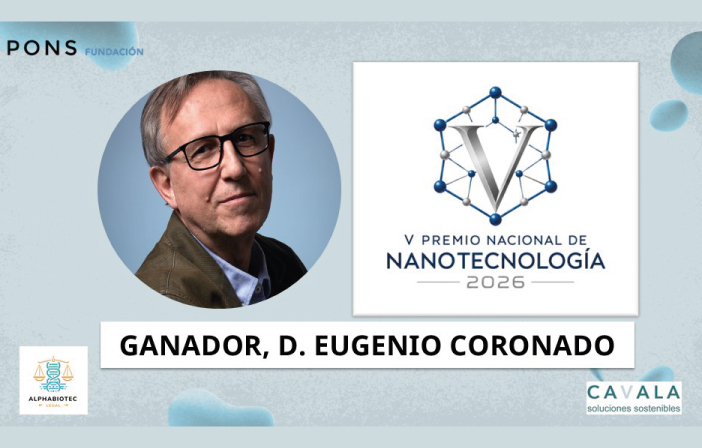
“We want to harness the unique properties of molecules to build key components for the quantum future,” explained Coronado, principal investigator of QMol. “Each molecule can behave like a quantum bit, and by linking many of them together we could create a system capable of performing calculations that current computers simply cannot handle.”
The approach is as innovative as it is promising: using tailor-made molecules designed to behave as qubits—the quantum bits that store and process information. The idea is for these magnetic qubits to couple with photons in superconducting resonators, which act as communication bridges between them. The result could be a more stable, scalable and magnetically noise-resistant processor than current quantum systems. However, developing a quantum processor based on magnetic qubits faces a major limitation: the weak coupling between the qubit and the photon, which makes it impossible to detect and connect these molecules individually. In this regard, QMol has recently found an alternative solution that could overcome this problem: using magnons instead of photons to achieve strong coupling between the magnetic qubit and the magnon. Magnons are excitations in a magnetic material that can be used to transfer information, similar to how electronics use electrons.
“What is fascinating about working with molecules is that we can almost custom-design them to couple not only with photons but also with the magnons generated in a magnetic material,” added Coronado. “This approach, based on a new concept—the magnonic resonator—gives us enormous flexibility to create quantum systems with greater capacity, fewer errors and enormous potential for the future.”
Beyond its technological potential, the project represents an exercise in multidisciplinary collaboration, involving experts in chemistry, physics, materials science and nanoscience from various Spanish and European centres, such as the Institute of Nanoscience and Materials of Aragón.
“Every step we take in this direction brings us closer to making quantum computers a reality,” Coronado concluded. “A few years ago it seemed like science fiction, but today we are building the foundations to make it possible.”
A university looking to the future through research
This project is one of the eleven initiatives that make up the Quantum Communication Plan, led in the Valencian Community by four prestigious universities: the Universitat Politècnica de València (UPV), the Universitat de València (UV), the University of Alicante (UA) and CEU Cardenal Herrera University (CEU-UCH).
Together, these initiatives cover a wide range of research and development lines aimed at driving quantum technologies and their applications in strategic areas such as computing, telecommunications and cybersecurity, thus establishing the Valencian Community as a benchmark in technological innovation at both national and international levels.
With more than five centuries of history, the Universitat de València has consolidated its position as a leading institution in research, teaching and knowledge transfer. Its participation in the Quantum Communication Plan reinforces its commitment to scientific excellence and innovation, positioning the Valencian Community as a hub of technological and scientific development nationally and internationally.
About the Valencian Quantum Communication Plan
The Complementary Plan for Quantum Communications is part of the EU’s Recovery Plan and has a total budget of 76 million euros. This plan aims to promote research and development in the field of quantum communications, a key technology for the future of telecommunications.
The Valencian Community is one of the regions participating in this project since 2022, together with Castilla y León, Catalonia, the Basque Country, Galicia and the Community of Madrid, as well as the Spanish National Research Council (CSIC).
In the case of the Valencian Community, funding for this plan comes primarily from the Ministry of Science, Innovation and Universities, which provides 65% of the resources—equivalent to €1,169,671.10—while the remaining 35%, approximately €629,822.90, is financed by the Regional Ministry of Education, Culture, Universities and Employment.
.jpg)