


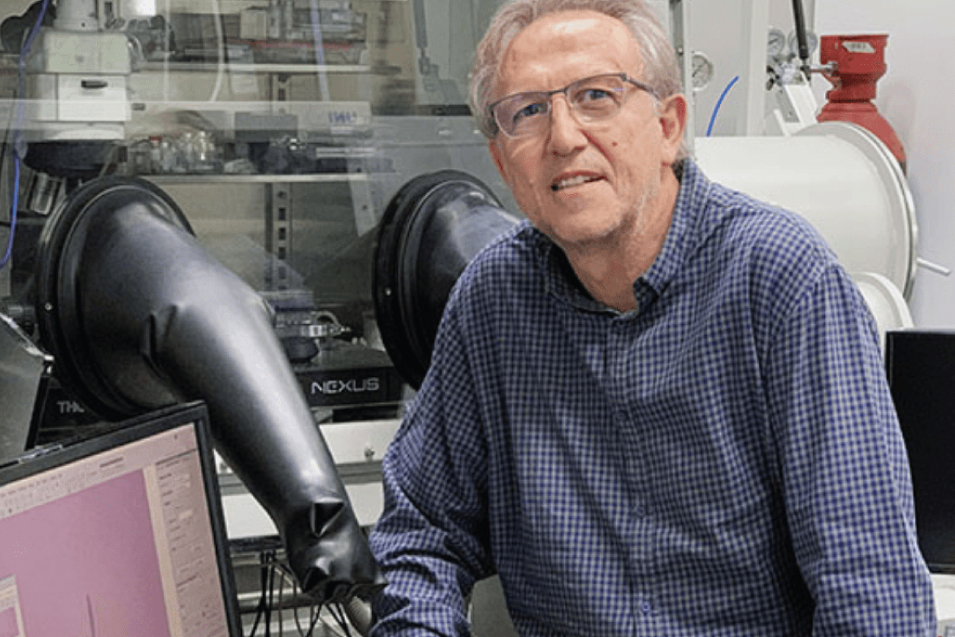
Eugenio Coronado, researcher at the Instituto de Ciencia Molecular (ICMol) of the University of Valencia, has been awarded an ERC Proof of Concept grant by the European Research Council (ERC) to advance the development of a new generation of electronic devices inspired by the functioning of the human brain. These devices combine two-dimensional materials with polymers featuring ionic mobility. The project will enable the transfer of fundamental research results into technological applications with potential impact on the electronics industry and neuromorphic computing.
The ERC Proof of Concept grant, endowed with €150,000, is awarded to projects previously funded by the European Commission and aims to explore their commercial and technological feasibility. In this case, the new proof of concept derives directly from the ERC Advanced Grant project Mol-2D, also led by Coronado, which focuses on the control and exploitation of the properties of two-dimensional materials with advanced electronic characteristics through a molecular approach.
The new project, entitled Molecular 2D/Polymer-based Memristors (Mol-2DMem), focuses on the development of memristors, electronic devices capable of combining memory and information processing in a single component. Unlike conventional chips, which separate these two functions, memristors enable more efficient information processing with very low energy consumption.
“One of the major challenges of artificial intelligence and the Internet of Things is the enormous energy cost associated with data processing. Memristors allow information to be processed where it is generated, without the need to continuously transfer it between memory and processor,” explains Eugenio Coronado.
The proposal by the Valencian team is based on embedding two-dimensional materials, such as molybdenum disulfide (MoS₂), into molecular polymers containing mobile ionic species. This approach gives rise to electrochemical memristors, in which the controlled movement of ions allows the electrical response of the device to be reversibly regulated. This combination results in hybrid devices with adaptable electronic behaviour, capable of mimicking short-term synaptic responses similar to those of the human brain.
Thanks to this approach, the new memristors can function as key elements in neuromorphic computing systems, one of the most promising research lines for the development of faster, more compact and more sustainable artificial intelligence. Potential applications include image recognition, biomedical signal processing and low-power intelligent sensors.
The ERC Proof of Concept project will make it possible to move from laboratory prototypes to devices that can be integrated into real electronic circuits, in collaboration with industrial partners. The aim is to validate their performance in environments close to real applications and to explore their potential transfer to the market.
Eugenio Coronado is Full Professor of Inorganic Chemistry at the University of Valencia and Director of ICMol, a leading centre in molecular nanoscience and advanced materials. His research focuses on the chemical design and development of functional molecules and materials with innovative electronic and magnetic properties, with applications in quantum technologies, spintronics and information storage.
In 2025, Professor Coronado was included in the list of the 100 most cited researchers in Spain and among the top 2% of most cited scientists worldwide, according to the ranking compiled by Stanford University and published in PLOS Biology.
ICMol leads a European project to develop new neuromorphic electronic devices
calendar_today
Jan 27, 2026
.jpg)
ICMol researcher Samuel Mañas-Valero receives the 10th Olivier Kahn International Award
ENEF 2026 Students Visit ICMol and Discover Its Main Research Areas
María Lucía Tamayo Wins the Universitat de València’s Third Doctoral Thesis Communication Competition
ICMol opens its laboratories to future researchers for the sixth edition of its Summer Campus
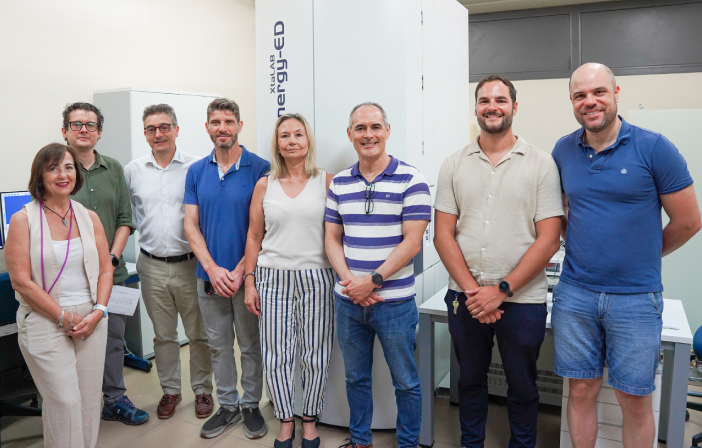
FUNIMAT-ICMol UV drives the acquisition of an advanced electron diffraction system at the Universitat de València’s SCSIE
Eugenio Coronado receives the 2026 National Nanotechnology Award
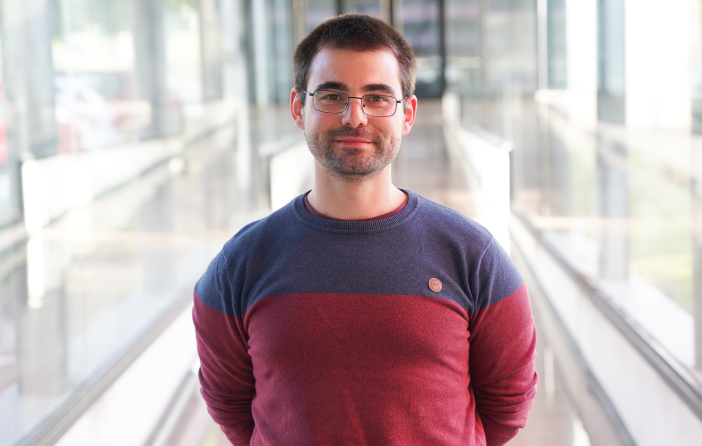
ICMol researcher Samuel Mañas-Valero wins the 10th Olivier Kahn International Award
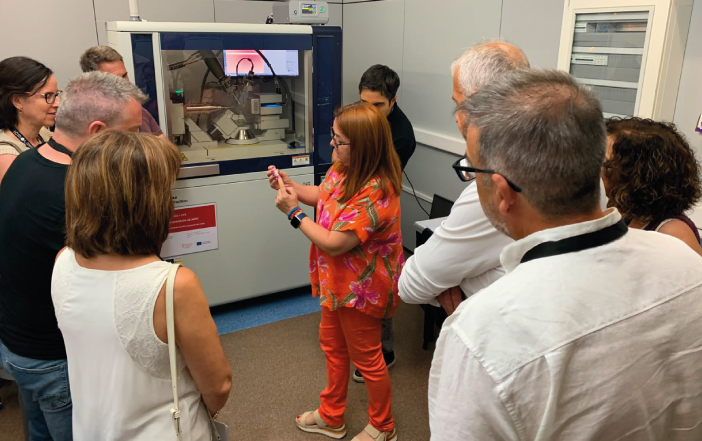
ICMol On Tour brings the Institute’s scientific capabilities closer to Valencian companies