

The Instituto de Ciencia Molecular develops new antifungal compounds against WHO priority pathogens.
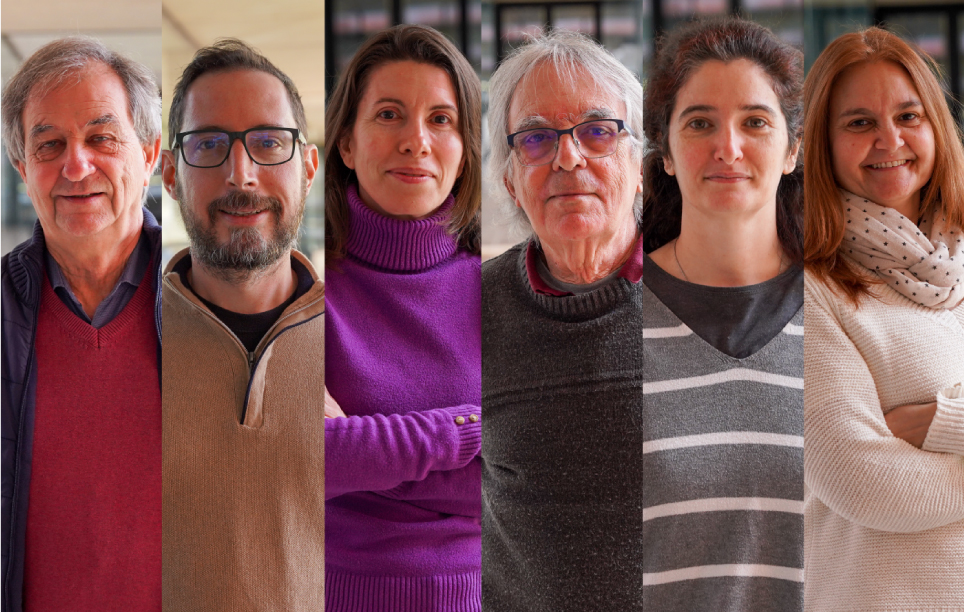
Research staff from the Instituto de Ciencia Molecular (ICMol) of the Universitat de València have developed a new family of compounds with notable antifungal activity against human pathogenic fungi, including microorganisms classified as priority pathogens by the World Health Organization (WHO). The results, obtained in collaboration with the Universidad de Chile, the Universidad Austral de Chile, and the Universitat Rovira i Virgili, have just been published in the scientific journal ACS Omega and have led to a national patent application that has recently been admitted for processing.
The work has been led by the Supramolecular Chemistry Group at ICMol, coordinated by Professor Enrique García-España, an interdisciplinary unit whose research combines approaches from biomedical and environmental chemistry. The group develops research lines focused on the design of new drugs, molecular sensors, and advanced hybrid materials.
Invasive fungal infections represent a growing global health problem, particularly among immunocompromised individuals, cancer patients, and transplant recipients. They are estimated to cause more than 1.5 million premature deaths each year, a figure comparable to major infectious diseases such as tuberculosis and three times higher than deaths caused by malaria.
In 2022, the WHO published a list of priority fungal pathogens to promote the development of new treatments against them. It is estimated that, out of the approximately 1.5 million known fungal species, only around 200 species of yeasts and molds are capable of infecting humans, generally causing superficial infections in healthy individuals. The limited number of available antifungal drugs and the emergence of resistance to conventional treatments have driven the search for new molecules with innovative mechanisms of action.
One of these polyamines (Pytren-2Q) has shown remarkable antifungal activity against pathogenic yeasts and molds, including strains resistant to standard treatments. Its efficacy is particularly notable against Aspergillus fumigatus, one of the four fungal pathogens classified by the WHO in the critical priority group due to its high mortality rate. Pytren-2Q is relatively easy to synthesize and also presents favorable pharmacological properties: it is a small molecule, highly water-soluble, and exhibits low toxicity in cellular and animal models. These features make it a promising candidate for the development of future antifungal therapies.
According to the research team, these results open the door to the development of a new generation of antifungal agents based on innovative supramolecular structures, as well as future collaborations aimed at their preclinical and clinical validation.
Patent protection
The therapeutic potential of this family of compounds has led to the filing of a national patent application, admitted for processing by the Spanish Patent and Trademark Office in April 2025. The invention protects the use of these macrocycles as antifungal agents and considers potential formulations for oral, topical, ocular, or intravenous administration.
The Supramolecular Chemistry Group at the Instituto de Ciencia Molecular focuses on the rational design of functional molecules with biomedical and environmental applications. Its main research lines include the development of compounds with antiparasitic, anti-inflammatory, and antitumor activity, the design of enzyme mimetics related to oxygen metabolism, selective interactions with nucleic acids, and the creation of molecular sensors for biologically and environmentally relevant species.
Article reference:
Mario Inclán, Maria Paz Clares, Eduardo Álvarez-Duarte, Fabiola Fernández-Silva, Valentina Salas, Josep Guarro, Javier U. Chicote, Begoña Verdejo, Estefanía Delgado-Pinar, Enrique García-España, Antonio García-España, and Enrique Calvo. Significant Activity of Pytren-2Q, a 2-Quinoline Polyamine Compound, against High-Concern Human Pathogenic Fungi. ACS Omega 2026, 11 (6), 9547–9556. DOI: 10.1021/acsomega.5c09700
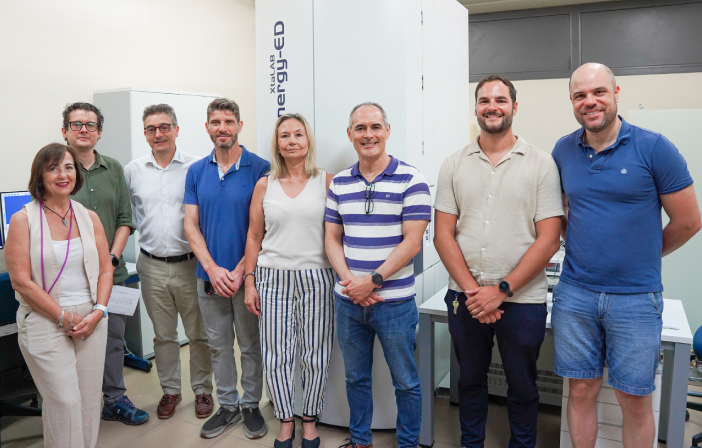
Foto: (De izquierda a derecha). Enrique Víctor García-España Monsonís, Mario Alfonso Inclán Nafría, Begoña Verdejo Viu, Antonio García-España, Mari Paz Clares García y Estefania Delgado Pinar.
.jpg)