

ICMol and MCHT address challenges in waste valorisation at an Innovation Breakfast
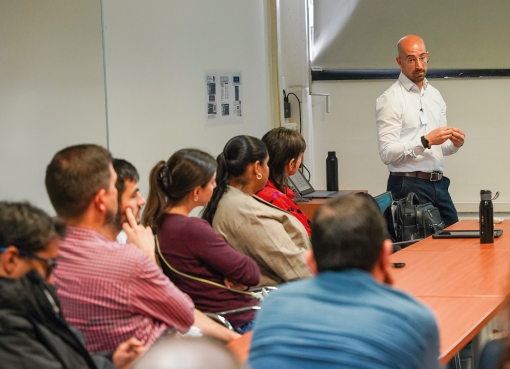
The Instituto de Ciencia Molecular (ICMol), a research institute of the Universitat de València, has held a new Innovation Breakfast together with the company Mediterranean Chemicals Technologies (MCHT), focused on chemistry applied to waste valorisation and the design of industrial processes.
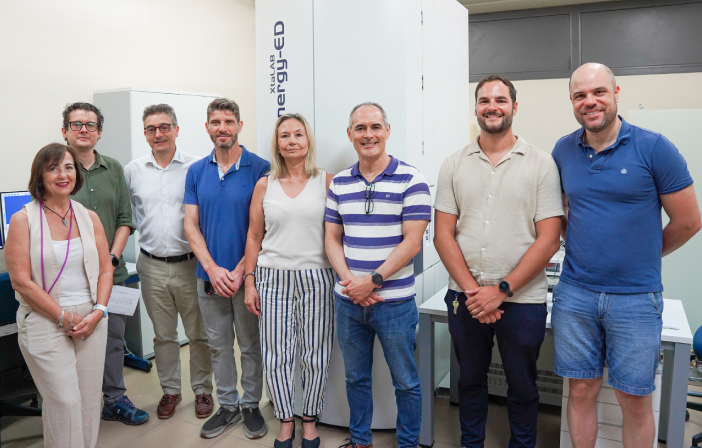
The session featured the participation of Rafael Llario, Managing Director of MCHT, a company specialised in the formulation of chemical additives and in the development of industrial processes for waste treatment and valorisation. During the meeting, real cases of technology transfer were presented, along with key current industrial challenges, with the aim of identifying collaboration opportunities with ICMol research groups.
“Strengthening the link between companies and research centres is key for knowledge to have a real impact. From research institutes, it is not enough to validate results: we must think about their applicability and the value they can bring to industry,” said Rafael Llario.
In this regard, he added: “Industry usually reaches out driven by necessity and, in Spain, where nearly 80% of the business fabric is made up of SMEs that cannot afford their own laboratories, collaborative work becomes essential.”
He also highlighted one of the main challenges in technology transfer: “Researchers often face difficulties in scaling up, and this is where companies come into play. It is not necessary for researchers to cover the entire process: collaboration with industry allows capabilities to be complemented and advances to go much further.”
For her part, Carmen Martínez, from the ICMol Transfer Office, emphasised the institute’s potential to address complex industrial challenges: “At ICMol, there is cutting-edge technology and equipment, and the research lines being developed aim to change the paradigm of many current problems. From the transfer office, we encourage researchers to be aware that they can contribute to solving many of today’s challenges.”
Martínez also highlighted the importance of integrating the business perspective from the early stages of research: “It is essential to start working with companies from the outset, incorporating this business perspective from the initial phases, and not only at the final stage when scaling or application becomes possible.”
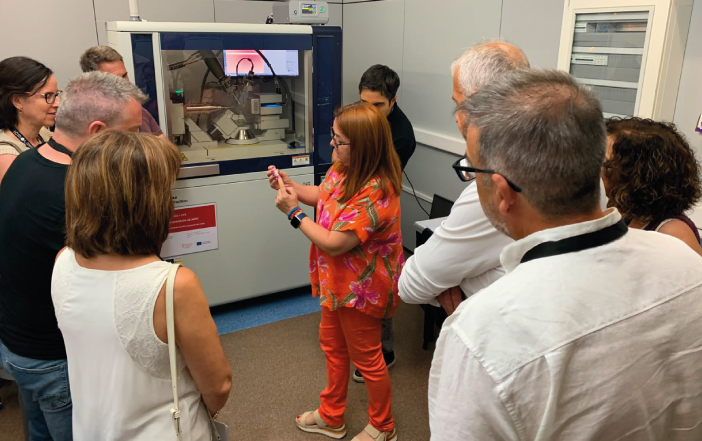
The event, held on 26 March 2026, focused on specific challenges such as the valorisation of hydrocarbon streams, including processes such as pyrolysis, gasification or refining, with particular emphasis on the removal of organic chlorine in hydrocarbons at small and medium-scale plants. Following the session, participants held one-to-one meetings to explore potential collaborations between the company and the institute’s research groups.
.jpg)